
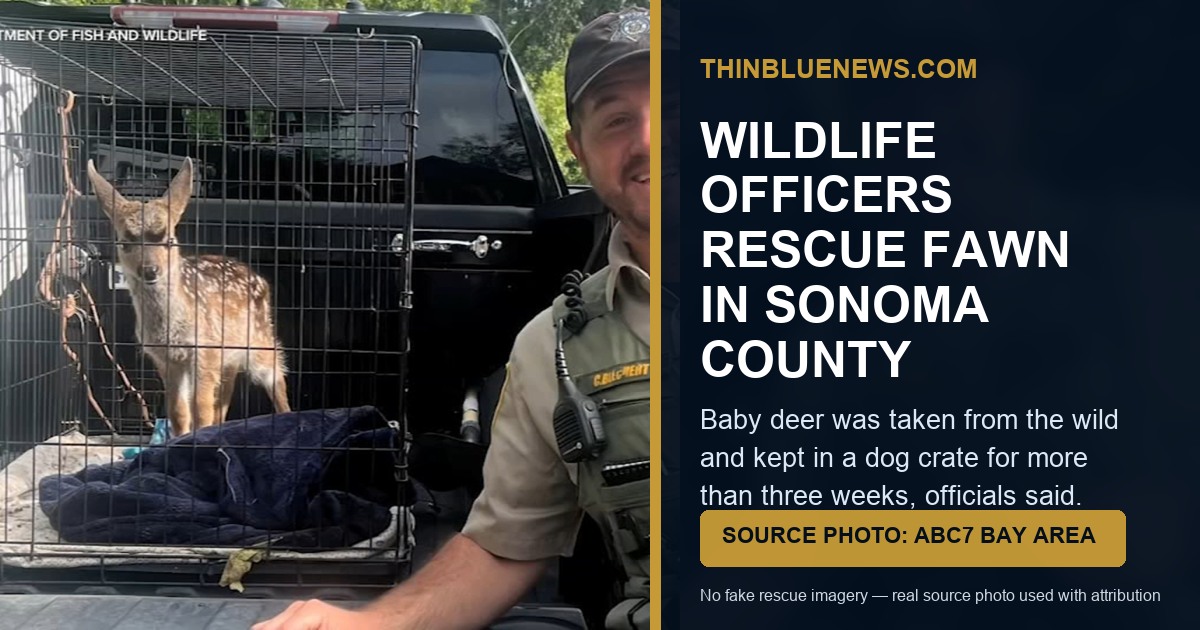
SONOMA COUNTY, California — California wildlife officers rescued a baby deer after investigators said it had been taken from the wild in Sonoma County and kept in a dog crate for more than three weeks.
ABC7 Bay Area reported that the California Department of Fish and Wildlife received a report showing people taking the fawn and keeping it in a dog crate. The outlet described the case as “fawn-napping,” a term wildlife officials use when young deer are removed from the wild by well-meaning or unlawful residents.
Fawn taken to wildlife rehabilitation facility
According to ABC7, investigators said the suspects admitted the fawn had been held in the cage for more than three weeks. One suspect was issued a citation, and the investigation remained ongoing at the time of the report.
Officials said the young deer was taken to a wildlife rehabilitation facility for care and is expected to be released back into the wild when it is large enough to care for itself, ABC7 reported.
Public-safety reminder: leave young deer where they are
The case also carried a broader public-safety warning. California wildlife experts have repeatedly urged the public not to pick up young deer found alone. A fawn that appears abandoned may simply be hidden while its mother feeds nearby.
ABC7 reported that the California Department of Fish and Wildlife says these calls happen each spring and summer, and that keeping deer in personal possession is illegal and unethical.
For law-enforcement and first-responder supporters, the Sonoma County case is a reminder that public-safety work is not limited to patrol cars and emergency rooms. Wildlife officers also handle enforcement, rescue and education calls where one quick report can change the outcome for an animal that cannot speak for itself.
Sources reviewed
- ABC7 Bay Area: Wildlife officers rescue baby deer kept in dog cage in Sonoma County “fawn-napping” case
- ABC7 Bay Area source image used for the featured article card
Editorial note: ThinBlueNews used a real source photo from the public report and did not create fake wildlife-officer or rescue imagery. The article avoids naming suspects and keeps the focus on the documented rescue, citation and public wildlife-safety warning.